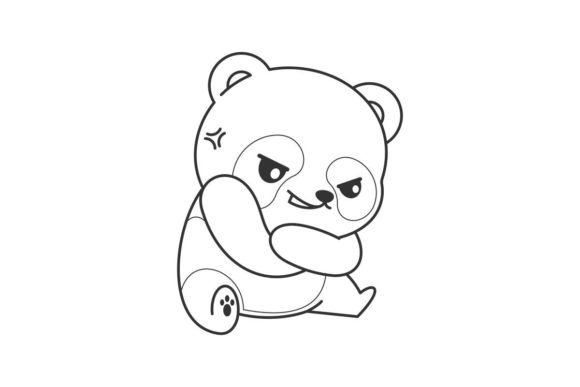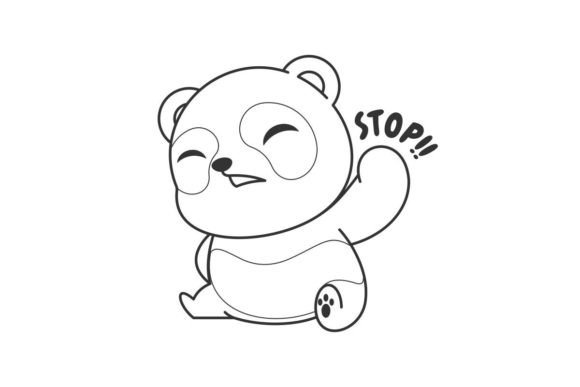
Cute Panda Says Stop: A Versatile Cartoon Line Style Asset
Every designer knows the power of a single, well-chosen asset to transform a project from mundane to memorable. The Cute Panda Says Stop Cartoon Line Style is precisely that kind of resource—a charming, versatile graphic that combines playful appeal with clear communicative intent. In modern graphic design, where capturing attention is paramount, this style of illustration offers a unique blend of personality and function, making it an invaluable addition to any creative toolkit.
Understanding the Visual Appeal and Utility
At its core, this asset leverages a universally adored subject—the panda—rendered in a clean, approachable cartoon line style. The "says stop" element introduces an interactive or conversational quality, perfect for guiding user behavior, highlighting caution, or simply adding a friendly directive. This combination is powerful in visual design because it marries emotional engagement with practical messaging. The line art foundation ensures scalability and clarity, adapting seamlessly from a tiny favicon to a large poster without losing integrity, which is crucial for professional branding and multi-platform campaigns.
Practical Applications Across Creative Projects
The true value of such an asset lies in its adaptability. Consider how it can enhance various facets of your design workflow:
- Branding and Logo Design: Integrate the panda character as a brand mascot to convey friendliness, approachability, and a sense of playful authority, ideal for brands in education, children's products, or eco-friendly sectors.
- Marketing Materials: Use it on flyers, brochures, and email headers to draw the eye to a call-to-action or important disclaimer, improving visual hierarchy and engagement.
- Social Media Graphics: Create standout posts for Instagram, Facebook, or TikTok. The character can announce a sale, warn against a common mistake, or simply entertain, boosting shareability and brand recall.
- Web and UI Design: Employ it as a custom illustration for error pages, tutorial tooltips, or onboarding screens within apps and websites, enhancing user experience (UX) with a delightful touch that reduces frustration.
- Packaging and Print Design: Add character to product packaging, stickers, or editorial layouts, making physical items more engaging and memorable for consumers.
Integrating Assets for Cohesive Design Systems
When incorporating any creative asset, thoughtful integration is key. For the Cute Panda Says Stop element, ensure its style aligns with your existing color palette and typography. Its cartoon line art can be easily customized—recolor the lines to match brand colors or pair it with a friendly, rounded font to maintain a consistent tone. Evaluate its use within your overall visual hierarchy; it should support, not overwhelm, your core message. This asset shines when used strategically to break up text, explain a concept visually, or inject personality into otherwise sterile interfaces.
Maximizing Impact with Quality Resources
Access to high-quality, scalable formats like vector files is essential. A vector-based Cute Panda Says Stop illustration can be resized infinitely, edited with precision, and optimized for both digital and print design projects without pixelation. This flexibility supports a streamlined design workflow, allowing for rapid prototyping and iteration. When selecting such assets, prioritize those that offer clear licensing for commercial use and come in multiple file formats (like AI, PNG, and JPG) to ensure compatibility across different software and applications, from Adobe Illustrator to Canva.
In the ever-evolving landscape of digital content creation, the right visual elements are not mere decorations—they are communication tools. Assets like the Cute Panda Says Stop Cartoon Line Style empower designers, marketers, and creators to produce work that is not only aesthetically pleasing but also functionally effective. By choosing resources that offer both charm and versatility, you invest in designs that resonate with audiences, strengthen brand identity, and ultimately achieve clearer, more engaging communication. Thoughtful selection of such tools is a hallmark of a sophisticated and efficient design practice.